Closed Cases
The full case
The phone call
In August 1973, a bank clerk held hostage in a Stockholm vault telephoned the prime minister of Sweden. She did not ask to be rescued. She asked to leave with the robbers.
Her name was Kristin Enmark. She had been a hostage for a day, and she told Olof Palme that she fully trusted the two men who were holding her.
By the time it was over, the hostages had shielded their captors from the police, and a psychiatrist had given the world a new phrase. Stockholm syndrome.
This is the story of six days inside a bank vault, and of a diagnosis that the woman it was built around has spent decades rejecting.
Norrmalmstorg
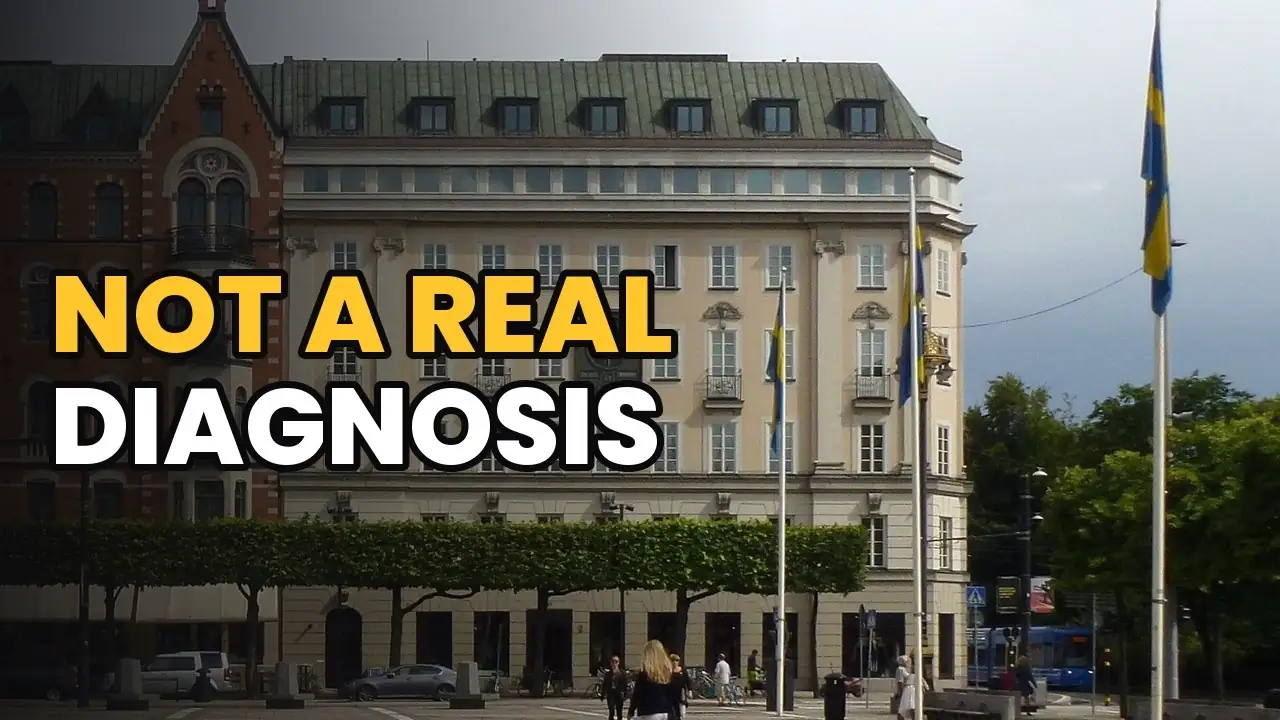
Norrmalmstorg is a square in the heart of Stockholm. On Thursday the twenty-third of August 1973, just after ten in the morning, a man walked into the Kreditbanken branch wearing a wig, sunglasses and makeup.
Under his jacket was a submachine gun. He fired a burst into the ceiling and announced, in English, that the party had just begun.
His name was Jan-Erik Olsson. He was thirty-two, a safe-cracker who had walked out of prison on furlough from a three-year sentence and never come back.
Police answered the alarm within minutes, and there was a brief exchange of fire. Then Olsson took the lobby, and four bank employees with it.
Three women and one man. Birgitta Lundblad, Elisabeth Oldgren, Kristin Enmark, and Sven Safstrom. Ordinary clerks, on an ordinary Thursday.
The demands
Olsson wanted three million Swedish kronor, a fast car, and one more thing. He wanted Clark Olofsson, a famous bank robber, brought to him from prison.
Clark Olofsson was the best-known criminal in Sweden, a man Olsson had befriended behind bars. Within hours the police delivered him, the money, and a blue Ford Mustang with a full tank.
What the police would not deliver was the hostages. Olsson could drive away, they said, but not with the four clerks. He refused to leave without them. The siege settled in.
Sweden had two television channels, and both covered the square almost without pause. A general election was less than a month away, and the whole country was watching.
Inside the vault
The robbers and the hostages withdrew into the bank's inner vault, a cramped steel room, and the door closed on all six of them.
Strange things began to happen. When Kristin Enmark shivered, Olsson draped his jacket over her. When Elisabeth Oldgren felt the walls closing in, he let her walk outside on a thirty-foot rope.
When Birgitta Lundblad could not reach her family by telephone, he told her to try again and not give up. By the second day, hostages and robbers were on first-name terms.
Then came the call. Enmark telephoned Prime Minister Olof Palme and told him she feared the police more than the men with the guns. She asked to leave with the robbers. The answer was no.
Sven Safstrom later said that when Olsson treated them well, they could think of him as a kind of emergency god. Outside, nobody understood it.
The drill
On the fourth day, the police drilled a hole through the vault ceiling from the apartment above. Olsson fired up through it, and an officer was wounded.
The hostages, Enmark said later, had become a world of their own in that vault. Anyone who threatened that world, including the police outside, became the enemy.
After more than one hundred thirty hours, on the night of Tuesday the twenty-eighth of August, the police pumped tear gas into the vault. Within an hour, the robbers surrendered.
And then the moment that made the case famous. The hostages refused to come out first. They feared that if the robbers walked out alone, the police would shoot them.
Two of the women called out to the police not to hurt the men, because the men had not hurt them. As she was carried away, Enmark told Olofsson she would see him again.
The next day, Elisabeth Oldgren asked a psychiatrist a question that would echo for decades. Is there something wrong with me? Why don't I hate them?
The diagnosis
The police had been advised during the siege by a psychiatrist, Nils Bejerot. He gave the hostages' behaviour a name: the Norrmalmstorg syndrome. Abroad, it became Stockholm syndrome.
Bejerot never interviewed the hostages. Enmark had criticised him on live radio during the siege, and he explained her words as a symptom. The two never spoke.
The following year, in California, the kidnapped heiress Patty Hearst joined her captors in a bank robbery. The world needed a word for it, and Stockholm had supplied one.
The courts
Jan-Erik Olsson was sentenced to ten years and released in 1980. Clark Olofsson was convicted too, but an appeal court overturned it. He said he had only tried to keep the situation calm.
The hostages visited both men in prison. Olofsson and Enmark met many times over the years, and their families became friends. Olsson married a woman who had written to him, and later ran a shop in Thailand.
The doubt
Here is the twist. The syndrome named after this case has never been accepted as a diagnosis. It appears in no edition of the manual psychiatrists use to classify disorders.
In 1999 the FBI looked at more than twelve hundred hostage incidents in its own database. Only about eight in every hundred victims had shown any sign of the syndrome.
A 2008 review found no agreed set of symptoms. And in 2015, the critic Allan Wade argued that the label shifts attention from real events onto invented pathologies in the minds of victims, most of them women.
Kristin Enmark has said it most simply. She did what she had to do to survive. She trusted the men in the vault because they could keep her alive, and she feared the men outside.
The end
So the Norrmalmstorg robbery gave the world a phrase, and the phrase outlived the facts. Four clerks survived six days in a vault by making peace with the people holding the guns. Perhaps that was not a syndrome. Perhaps it was sense.