Closed Cases
The full case
The voice
For eighteen months one of the largest police inquiries Britain had seen chased a voice on a cassette tape. The voice belonged to a hoaxer. The real killer was interviewed nine times and let go.
This is the story of the Yorkshire Ripper, the hoax that sent the hunt the wrong way, the traffic stop that ended it, and the envelope that found the hoaxer twenty-six years later.
Between 1975 and 1980, thirteen women were murdered and seven more were attacked in the north of England, most of them in West Yorkshire, in and around Leeds and Bradford.
The first murder, in Leeds in October 1975, drew a hundred and fifty officers and eleven thousand interviews. It was the beginning of an inquiry that would bury itself in paper.
The paper
West Yorkshire Police ran the hunt from a major incident room, under Assistant Chief Constable George Oldfield. Every statement, every sighting, every name went onto a handwritten index card.
There were no computers. Cards piled up faster than anyone could read them, and connections were missed. The killer's name was already in that room, and would be for years.
The five pound note
In October 1977 a woman named Jean Jordan was killed in Manchester. In her handbag was a brand-new five pound note. Detectives traced its serial number to bank branches in Bingley and Shipley.
The note had gone out in wage packets. Around eight thousand workers could have received it. Over three months, police interviewed five thousand men. One of them was a lorry driver named Peter Sutcliffe.
His haulage firm's payroll had drawn money from those banks. He gave an alibi, a party, and detectives moved on. It would not be the last time they stood in his doorway.
Wearside Jack
Then, in March 1978, an envelope arrived for George Oldfield, postmarked Sunderland. The writer claimed to be the Ripper. Two more followed over the next year, one of them to a national newspaper.
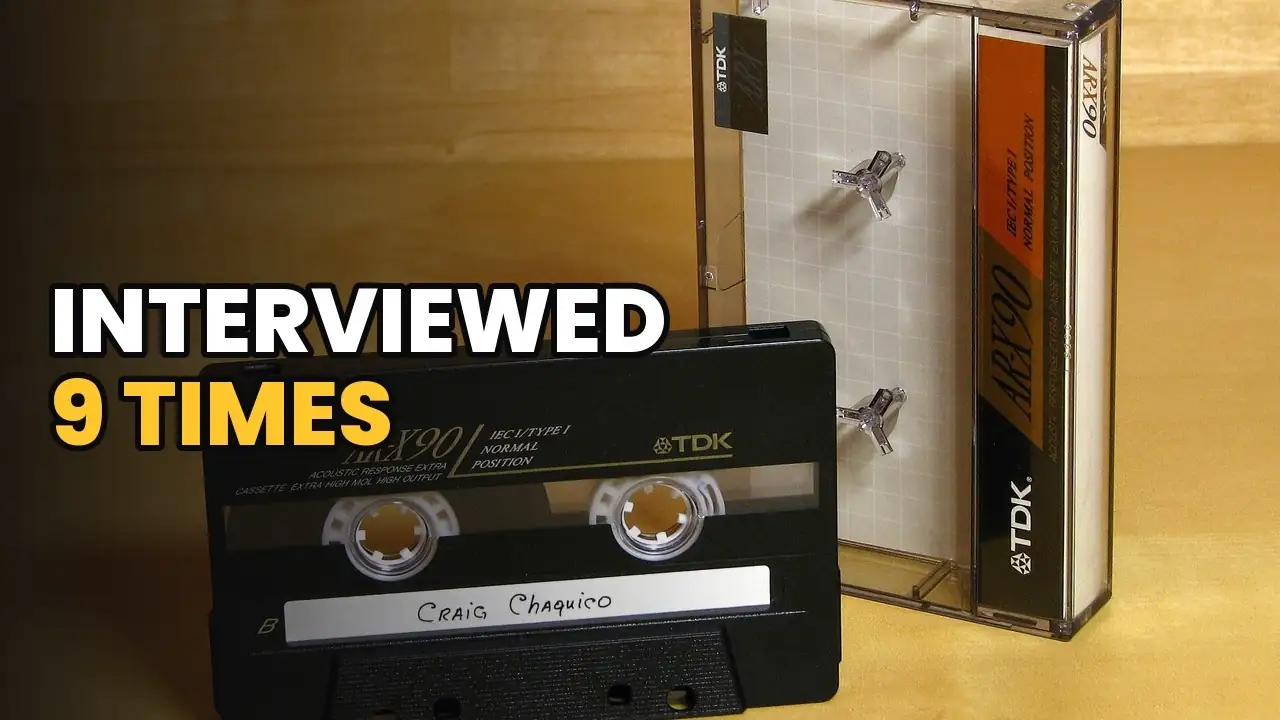
On the seventeenth of June 1979 a cassette arrived. A voice with a Wearside accent taunted Oldfield by name and said only that he was Jack.
The letters carried details that seemed to fit, and saliva on one envelope matched a blood group found at a crime scene. To Oldfield, it was real. He said so in public.
Voice experts traced the accent to Castletown, a district of Sunderland. In June 1979 the police launched televised appeals, and the inquiry turned north-east, away from Yorkshire.
Five thousand advertising hoardings went up. Adverts ran in three hundred newspapers. One million pounds of the inquiry's budget went on the campaign, and forty thousand men were investigated because of their accent.
The wrong way
In September 1979 a confidential instruction went out to detectives: suspects without a North-East accent could be disregarded. The inquiry had just closed its door on the killer.
Peter Sutcliffe spoke with a Yorkshire accent. He was interviewed nine times in five years, four of them after that instruction. Each time, the accent helped rule him out.
In July 1979 Detective Constable Andy Laptew interviewed Sutcliffe at home in Bradford and came away unsatisfied. He wrote a two-page report. It was dismissed.
In November 1980 a friend of Sutcliffe's, Trevor Birdsall, sent an anonymous letter naming him, then walked into Bradford police station to say it in person. The record of his visit was lost.
The traffic stop
On the night of the second of January 1981, in Sheffield, two patrol officers, Sergeant Robert Ring and Constable Robert Hydes, checked a car parked in a driveway with a man and a woman inside.
The number plates were false. The driver, a lorry driver from Bradford, asked to relieve himself before being taken in and stepped into the dark for a moment. He was arrested over the plates.
The next day Sergeant Ring went back to that driveway and searched the spot where the man had stepped away. Hidden in the leaves were a hammer, a knife and a length of rope.
At the police station another knife was found hidden in a toilet cistern. On the fourth of January 1981, after two days of questioning, Peter Sutcliffe admitted that he was the Yorkshire Ripper.
The trial
His trial began at the Old Bailey in London on the fifth of May 1981. He admitted seven attempted murders and argued that the killings were manslaughter, on the grounds of diminished responsibility.
The judge insisted a jury should decide. On the twenty-second of May 1981 the jury found him guilty of all thirteen murders. He received twenty life sentences, with a recommended minimum of thirty years.
The reckoning
Sir Lawrence Byford, an inspector of constabulary, reviewed the inquiry. He found the incident room a serious handicap, with a backlog of unread paper and an index that let Sutcliffe continually slip through the net.
He criticised Oldfield's faith in the tape. The report went to Parliament in January 1982, but its full text stayed locked away until June 2006.
The paper system was finished. In 1986 British police began using a computer system for major inquiries, known as Holmes, built so that no card would again sit unread in a tray.
The hoaxer
The hoaxer was never forgotten. The envelopes had been kept, and the saliva on them was still there. In 2005 a cold case review ran that DNA through the national database.
It matched a sample taken in 2001 from a man cautioned for being drunk and disorderly. John Humble, an unemployed labourer from Sunderland, was arrested in October 2005.
At Leeds Crown Court in March 2006, Humble, now fifty, admitted four counts of perverting the course of justice. He was sentenced to eight years in prison.
He said he had felt guilty when another woman was murdered after police announced they were taking his letters seriously. The tape had taken him minutes. The damage took years to undo.
The lesson was not about one detective. It was that an inquiry which believes a single clue too much stops seeing everything else, even a name that is already in its own files.